Thursday, November 14, 2019

Books That Affect Us Like a Disaster

Reader in an Armchair
at Franz Kafka Square 1 ~ Prague, Czech Republic
in front of World of Kafka Exhibition
“I think we ought to read only the kind of books that wound or stab us. If the book we're reading doesn't wake us up with a blow to the head, what are we reading for? So that it will make us happy, as you write? Good Lord, we would be happy precisely if we had no books, and the kind of books that make us happy are the kind we could write ourselves if we had to. But we need books that affect us like a disaster, that grieve us deeply, like the death of someone we loved more than ourselves, like being banished into forests far from everyone, like a suicide. A book must be the axe for the frozen sea within us. That is my belief.”
~ Franz Kafka ~

Thanks to my friend Igor Steinman for sharing this
impressive no - longer - banned - books monument,
on the The Bebelplatz in Berlin, along with several
other memorials to the shameful burning of books.

Detail of Girl Reading ~ San Francisco
(I think by George Lundeen)

Recommended Reading: Karel Čapek

Thursday, October 31, 2019

Literature Only!

Some Excellent Advice from the Airline

An Excellent Book to Read While Traveling!

Bryson is always so knowledgeable that it's hard to pick the most informative anecdote and so hilarious that it's impossible to pick the funniest. The Road to Little Dribbling is no exception.

That being said, this passage is a favorite, not necessarily for wisdom or humor, but more for it's poetic loveliness. If there's one thing Bryson can do, it is to wax lyrical in praise of Britain, land that he loves:
"This is the most extraordinary thing about Britain. It wants to be a garden. Flowers bloom in the unlikeliest places -- on railway sidings and waste grounds where there is nothing beneath them but rubble and grit. You even see clumps of flowery life growing on the sides of abandoned warehouses and old viaducts. If all the humans in the UK vanished tomorrow, Britain would still be in flower. This is in complete contrast to American, where nature is wild and raw. You need flamethrowers to keep the weeds in check where I come from [Iowa]. Here is is just miles of accidental loveliness. It is really quite splendid." (72)
from
The Road to Little Dribbling:
Adventures of an American in Britain

Monday, September 16, 2019

Too Sad to Read?

Photo from Ideal Bookshelf ~ Jane Mount

A few months ago, Ben and I participated in a facebook forum on the issue of 10th graders being required to read The Kite Runner. The discussion was initiated by a parent who was concerned because her daughter was "crying and dry heaving because of it last night."

Ben's Response:

(1) From internet lore:
Q: Why are 15 year olds so angry?
A: Because humanity has an ugly side and around 15 is when you start to learn that.

(2) If she had waited until age 18 to read that scene would she have not found it emotionally wrecking? Why or why not? (If I were to read it again this morning to catch up real fast on this facebook conversation would I have (still) found it emotionally wrecking? Spoiler alert: yes)

(3) I think whether she's ready to read and think about that scene depends a lot on what guidance she'll have processing it. If her parents, her teachers, and her peers can help her channel her feelings of devastation into making her more empathetic and more able to imagine others complexly (as John Green likes to say) then she should read the book -- or I suppose should have read the book, it's innocence lost now. If there is no support and she turns bitter and angry, then that's a bad outcome. Statements like "15 is too young to read that book" strike me as lacking a bit too much in nuance.

(4) Paging Kitti Carriker, interested to hear her thoughts on this.

Thanks to Ben for paging me!
I appreciate that!

I was reminded first
of a previous blog post
and a favorite quotation:

"Now, no matter what the mullah teaches, there is only one sin, only one. And that is theft. Every other sin is a variation of theft. . . . When you kill a man, you steal a life. You steal his wife's right to a husband, rob his children of a father. When you tell a lie, you steal someone's right to the truth. When you cheat, you steal the right to fairness. . . . There is no act more wretched than stealing" (The Kite Runner, 17 - 18). ~ Khaled Hosseini
A reader's response to the quotation
took me somewhat by surprise:

Being forced to read the kite runner as a freshman in high school stole my kids innocence. How ironic.
To which I followed up:
Do you think reading Kite Runner should be postponed until college? Because of the sexual assault? I don't think Ben & Sam ever had it as assigned reading in highschool or college, though since that time, Ben has read it on his own (not sure about Sam). I have also read A Thousand Splendid Suns -- so much sorrow but also hope.

Further notes from my conversation with Ben about the
earliest books that broke our hearts and left us weeping:


Short Stories by Flannery O'Connor
"A Good Man is Hard to Find"
"Good Country People"
"The Life You Save May Be Your Own"

Short Stories by Ernest Hemingway
"God Rest You Merry, Gentlemen"
"In Another Country"

Louanne Ferris
I'm Done Crying: The Making of A Nurse

Lillian Roth
I'll Cry Tomorrow

Maya Angelou
I Know Why the Caged Bird Sings

Anthony Burgess
A Clockwork Orange

Truman Capote
In Cold Blood

William Golding
Lord of the Flies

Thomas Hardy
The Mayor of Casterbridge

Ken Keasey
One Flew Over the Cuckoo's Nest

Harper Lee
To Kill a Mockingbird

Boris Pasternak
Doctor Zhivago

Robert Newton Peck
A Day No Pigs Would Die

Ayn Rand
We the Living

And at an even earlier age:
The Steadfast Tin Soldier
The Little Prince
Harry Potter IV: Goblet of Fire


1. Ben -- others that I overlooked?

2. Additional heart - breaking, eye - opening books.

3. Advice from George Bernard Shaw:

"You have learned something.
That always feels at first
as if you have lost something."

Saturday, August 17, 2019

Does Nanny Have a Line?

Rebecca & Kitti

A week ago, my friend and fellow English teacher, Rebecca Saulsbury Bravard, called me out on facebook;

and more recently my friend Clare Coleman:
"I have accepted a challenge to post seven books that I love, one book per day, no exceptions, no reviews, just covers. Each day I may ask a friend to take up the challenge. Let's promote literacy and a book list. Today, I nominate Kitti Carriker."
So, here are mine. Seven novels (published 1996 - 2003*) in that rare category of books on my shelf -- life being so short and all -- that I have loved enough to read and re-read more than once. These seven titles are bound together, in my mind, because of their struggling contemporary heroines, whose great one - liners continually speak straight to my heart.

For example:
I mean, do you have a line?
Is there a line they could cross?

*****

It's so over the line.

Oh, does Nan have a line?

Yes, I have a line!


(133, 224 - 25)


*date of publication
& links to previous blog posts:

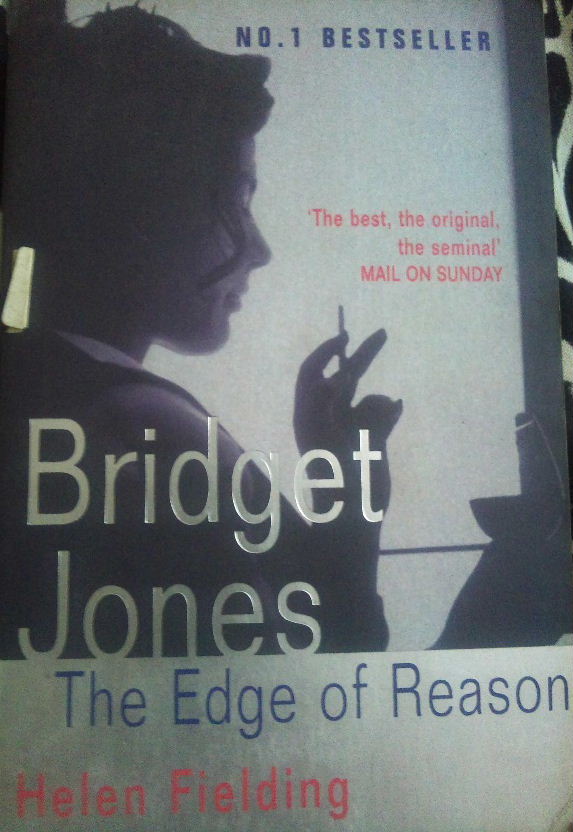
1996 ~ Bridget Jones's Diary
1999 ~ Bridget Jones: The Edge of Reason, Helen Fielding

2001 ~ Do Try to Speak as We Do, Marjorie Leet Ford
2001 ~ High Maintenance, Jennifer Belle
2002 ~ The Nanny Diaries, Emma McLaughlin & Nicola Kraus
2002 ~ A Perfect Arrangement, Suzanne Berne
2003 ~ Dogs of Babel, Carolyn Parkhurst

Wednesday, July 17, 2019

To Assume My Humanity

Enfant écrivant (1870) ~ Henriette Browne (1829 - 1901)
Alternately entitled: A Girl Writing; The Pet Goldfinch

**************************

From youth to age we turn to books
in search of our true selves . . .


"When you were young
And your heart was an open book

You used to say live and let live
You know you did
You know you did
You know you did
But if this ever changin' world
In which we live in
Makes you give in and cry
Say live and let die
. . ."
~ Paul & Linda McCartney ~


"When you are old and grey and full of sleep,
And nodding by the fire, take down this book,
And slowly read, and dream of the soft look
Your eyes had once, and of their shadows deep
. . ."
~ William Butler Yeats ~


**************************

Steve Almond: "Literature exists to help people know themselves. . . . What I want to argue in this peculiar pint-sized ode is that our favorite novels aren't just books. They are manuals for living. We surrender ourselves to them for the pleasures they provide, and for the lessons they impart" (9, 15, emphasis added).

From his essay:
William Stoner and the Battle for the Inner Life
[Recommended by Ned; see also Stoner; and Victoria]


Madeleine L'Engle: "Journal entries for those days were earnest. I was reading as many letters of the great wrtiers as I could get hold of, and copying out the things that touched me closely. . . . Chekhov . . . Thoreau . . . Plato . . . Slowly I was learning who I was and who I wanted to be with the help of the great ones who had gone before me" (39 - 41, emphasis added).

From her autobiography:
Two - Part Invention: The Story of a Marriage


Marilynne Robinson: "Why do we need to read poetry? . . . Read it and you'll know why. If you still don't know, read it again. And again. Some of them took the things she said to heart, as she had done once when they were said to her. She was helping them to assume their humanity" (21, emphasis added).

From her novel
Home
**************************

So I asked myself: Who were the poets who helped me "assume my humanity"? Which "great ones" had paved the way? When did this process begin and with what authors?

For teen - age booksworms, particularly girls, a typical and time - honored answer might be Jane Austen, or the Bronte sisters. For me, however, it was Taylor Caldwell and Lloyd C. Douglas. Literary or not, these were the authors who inspired a summertime (1970 or so) quest to read if not their complete works, at least all that I could see on the library shelf.

Around the same time, my appreciation of poetry was kindled not by any one matchless poet but by the editor Ted Malone who introduced the selections in his anthology so tenderly that my heart was ready to honor each poem before I even read it. Next (1974 - 1980) came the early soul - searching and consciousness - raising poems of Naomi Shihab Nye; and eventually I gathered "who I was and who I wanted to be" from Edna St. Vincent Millay, Mary Oliver, Marge Piercy, Walt Whitman, Ernest ~ Sandeen (please see comment below).

When I asked Gerry about the idea of assuming one's humanity through literature, he named Charles Dickens and George Orwell. Unlike Gerry, who answered with no hesitation whatsoever, I confess to a few moments of consternation before settling on Franz Kafka and Virginia Woolf as the classic reading - list authors who most significantly provide pleasure, impart wisdom, and profoundly impact my way of understanding the world around me and the world inside my head.

A couple of summer's ago, my friend Don Lynam suggested that we all share our "list of books that have survived multiple purges." So many people posted so many intriguing titles, ranging from classics tried and true to others lesser known, with a generous sprinkling of curious, eccentric, and unique choices! Each item, thoughtfully chosen, had undoubtedly aided the various contributors in the assumption of their humanity.

The titles on my personal list overlapped with many already included in Don's survey, so I added only two: my all - time favorite The Master & Margarita by Mikhail Bulgakov; and, on Gerry's behalf, Diary of a Man in Despair by Friedrich Reck-Malleczewen.

**************************

In closing, here are a few life - changing, mostly non-fiction "manuals for living" that would survive any purge of mine. If you are in search of life coach advice, try delving into -- or even just skimming -- nearly anything written by . . .

Brian Andreas - poetic cartoonist
Bill Bryson
Paul Collins - Not Even Wrong
Joan Didion - "On Keeping a Notebook" ~ "On Self - Respect" ~
"In Bed: On Migraines"
Andrea Dworkin
Marilyn French - The Women's Room
Stephen Jay Gould

Anne Lamott ~ Turning 60 / 61 / 68 / 70 / Commence
"Age Makes the Miracles . . ." [in comments below}

Alan Parsons - lyricist
Leonard Shlain - The Alphabet Versus the Goddess
Sarah Vowell
Barbara G. Walker - The Skeptical Feminist: Discovering the Virgin, Mother, and Crone

And three plays:
The Fantasticks
Our Town ~ "The Least Important Day"
Stop the World -- I Want to Get Off

Monday, June 24, 2019

From the Desk Of

What the painting looks like with its
"expansive background" ~ hanging on the wall
at The National Museum for Women in the Arts

*******************

From A Gentleman in Moscow
By American novelist Amor Towles (b 1964)
“A king fortifies himself with a castle,” observed the Count, “a gentleman [or a scholar] with a desk.”

The Count ran his hand across the desk's dimpled surface.

How many of the Grand Duke's words did those faint indentations reflect? Here over forty years had been written concise instructions to caretakers; persuasive arguments to statesmen; exquisite counsel to friends. In other words, it was a desk to be reckoned with.
(12, 18)
*******************

P.S.

For more on the Readerly / Writerly Life
see my current posts

From the Desk of Ernest Hemingway:
"But never feel as good as while writing."


&

From the Desk of Simone de Beauvoir:
On the Side of Happiness


@ The Fortnightly Kitti Carriker
A literary blog of connection & coincidence;
custom & ceremony

Friday, May 24, 2019

"You know she likes that, right?"

Thanks (& Happy Birthday)
to my twin brother Bruce
& his friend Stefanie for sending this one along!
"Never Try to Punish a Bookworm"
This tee-shirt reminds me of an anecdote told by the author Alice Hoffman about how she decided to be a writer. One day in Junior High, she got in trouble passing notes at school, so to punish her, the teacher intercepted the note and read aloud everything that she had written to her friend.

But instead of feeling embarrassed, Hoffman thought, "Wow, this is pretty cool to have all these people listening to what I just wrote!" After that, she said, there was no stopping her!

from her lecture at "Wordstock" 2016
Portland (Oregon) Book Festival
************************

My brother says it reminds him
of an experience with his two daughters:
My older, Anna Mary, was misbehaving.
I don't recall what she did that provoked my ire,
but I sent her to her room.

My younger, Sara Beth, was standing there.
She looked at me rolled her eyes in disgust.
"What?" I asked.
To which Sara Beth replied,
"You know she likes that, right?"
************************

Reader's Paradise ~ Aimee Stewart